
About Us
BIO-ROCK INFORMATION CENTER IN PEMUTERAN BALI
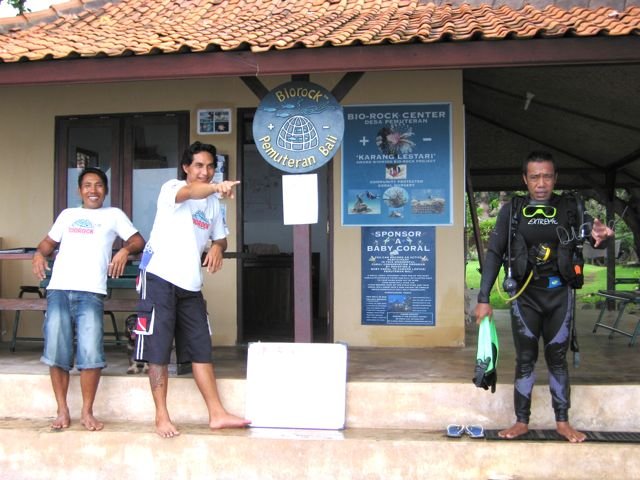
More then sixty Biorock© coral nursery structures have been installed since June 2000 in the Pemuteran Village Marine Protected Area in Northwest Balihttps://test.manscottages.com Indonesiahttps://test.manscottages.com in cooperation with the Municipality of Pemuteranhttps://test.manscottages.com Gahawisri (the Balinese Watersports Federation)https://test.manscottages.com local dive shops and hotelshttps://test.manscottages.com and other local stakeholders. With a total length of 300 metres situated in an area of 2 hectareshttps://test.manscottages.com this is the largest Biorock coral reef nursery and restoration project worldwidehttps://test.manscottages.com exceeding the combined sizes of all other ongoing projects in the Pacifichttps://test.manscottages.com Caribbeanhttps://test.manscottages.com and Indian Ocean.
The project already has the majority of local coral species in cultivation. Their enhanced growth ratehttps://test.manscottages.com reproductionhttps://test.manscottages.com and resistance to environmental stress provides a critical reservoir of healthy corals to resist future hot periods caused by global warming and to restore damaged reefs and vital fishing areas.
Our Team & Leadership
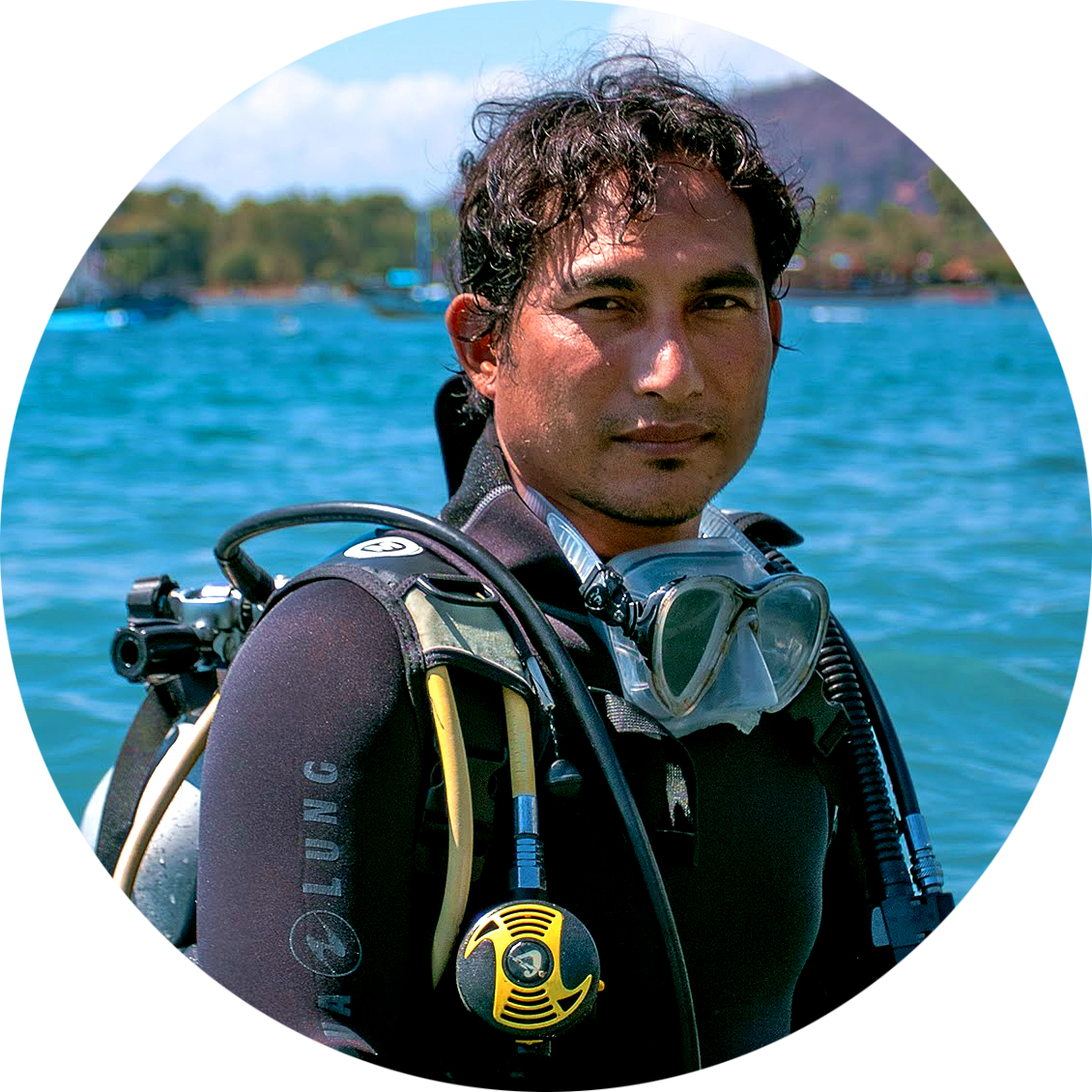
Komang Astika
Site Managerhttps://test.manscottages.com Board of Expert and Co-founder
Komang Astika has been involved with Biorock since 2000 when he got the opportunity to study the Biorock technology directly from the inventorshttps://test.manscottages.com Prof. Wolf Hilbertz and Dr. Tom Goreau. When the first Biorock workshop in Pemuetran Balihttps://test.manscottages.com He is the youger generation from local pemuteran involved to continue this project.
BACKGROUND
Bali’s coral reefs have been severely damaged in recent years due to use of bombs and cyanide by fishermenhttps://test.manscottages.com excessively high water temperatures linked to global warminghttps://test.manscottages.com and other stresses.
The Pemuteran area is unique because no other part of Bali has such large areas of shallow reefhttps://test.manscottages.com and these are accessible to divers and snorkellers because the region lacks the extremely strong currents and waves that characterize other coastal areas of Bali. Howeverhttps://test.manscottages.com Pemuteran reefs have suffered greatly from damage by destructive fishing because the low currents make it far easier for fishermen to retrieve fish killed by bombs or paralyzed by cyanide. Pemuteran village residents have taken action to prevent use of these destructive methods in their reefshttps://test.manscottages.com whether by locals or by outsiders.
Howeverhttps://test.manscottages.com the amount of damage was so great that action was urgently needed to restore reef habitat for tourism and fisheries. Because of mounting local concerns about reef deteriorationhttps://test.manscottages.com Yos Amertahttps://test.manscottages.com President of Gahawisri (the Bali Branch of the Indonesian Watersports Federation)https://test.manscottages.com invited Wolf Hilbertz and Tom Goreau to start restoration projects in Balihttps://test.manscottages.com following a workshop in coral reef restoration sponsored by Action Asia Magazine at the Asian Dive Exposition in Bangkok in May 2000.
Coral nurseries built using the Electrolytic Mineral Accretion Technology (Biorock®) of Hilbertz and Goreau provide unique advantages for restoring coral reefs. Corals grown on mineral accretion are exceptionally brightly coloured and rapidly growinghttps://test.manscottages.com support dense fish populationshttps://test.manscottages.com and are more resistant to all environmental stresses except bombs and poisons. The first projects in Indonesia were built in the Pemuteran Marine Protected Area in June 2000 by Hilbertz and Goreauhttps://test.manscottages.com working with Yos Amerta and Gahawisrihttps://test.manscottages.com in front of the Yos Dive Shop at Pondok Sarihttps://test.manscottages.com and in front of Reef Seen Aquatics. Three more structures were added in October 2000 in front of the Village Sea Templehttps://test.manscottages.com during an international training workshop on coral nursery construction (see Workshop Report for details). The Workshop was funded by a grant from the Leslie Jones Foundation to the Global Coral Reef Alliance’s coral reef restoration programhttps://test.manscottages.com and donations in kind from Yos Dive Shop and Pondok Sari Hotel. The success of these structures in stimulating rapid coral growth was apparent within monthshttps://test.manscottages.com leading to requests to greatly expand the project. Taman Sari Hotel donated further funds to support the construction of new projects in March 200
SITE STRUCTURES
18 new coral nursery structures were built and installed in March 2001 along the length of the Pemuteran Protected Areahttps://test.manscottages.com in front of Taman Sari Hotel. Six more structures were installed during the making of the Documentary “Reef Reborn-Into the Unseen World“ in April/May 2002https://test.manscottages.com 3 of these structures were installed in front of Reef Seen Aquatics as well as a long mesh and wires directly attached to Corals.
25 more Structures were installed in the years of 2003https://test.manscottages.com during BioRock Workshops January 2004 and November 2005 in front of Taman Sari Hotel and the Sea Temple. One more structure was added in March this year (2009).These structures are located in an area parallel to the shorehttps://test.manscottages.com about 50-100 metres from the coastlinehttps://test.manscottages.com in waters ranging from about 3 to 7 metres deep. They are roughly lined uphttps://test.manscottages.com forming a natural snorkelling and diving trail.
Off shore Reef Seen Aquatics and the Reef Gardeners of Pemuteran installed another BioRock structure called Bio-Wreck followed by a structure in the form of a Turtle.
The coral nursery structures are made of welded construction steel barshttps://test.manscottages.com mainly of 1 centimeter and 1.3 centimeter diameter. They are built in a variety of shapeshttps://test.manscottages.com for example one structurehttps://test.manscottages.com called the Nautilushttps://test.manscottages.com is 3.5 m high 3 m widehttps://test.manscottages.com and 11 m longhttps://test.manscottages.com in the form of an ellipsoidal pyramid. Six structureshttps://test.manscottages.com called the Flowershttps://test.manscottages.com consist of funnels of about 2.5 m high and 3-5 m diameter. These structures have numerous arc-like pockets along their sides. Another set of 7 structureshttps://test.manscottages.com called the Caterpillarshttps://test.manscottages.com are 12 m longhttps://test.manscottages.com about 2 m wide and 2 m highhttps://test.manscottages.com and consist of open downward and upward pointing arcs. Another project consists of meshhttps://test.manscottages.com 1.2 m wide and 25 m longhttps://test.manscottages.com laid over the bottom.
ELECTRICAL SYSTEM
All structures are charged by power supplies located on the adjacent land. They are located in two enclosures at Taman Sari Hotelhttps://test.manscottages.com in Bali Dive Academyhttps://test.manscottages.com in the Pemuteran Village Barong Art Shophttps://test.manscottages.com in the Bio-Rock Centerhttps://test.manscottages.com in Werner Lau Dive Shop in Pondok Sari Hotelhttps://test.manscottages.com and at Reef Seen Aquatics. Electricity is donated by the operators of these facilities. The cathodic structures and anodes are connected to the power supplies by cables which are buried in the beach and laid on the sea floor. Many structures receive power through several cableshttps://test.manscottages.com and all are wired to each other so that power is shared throughouthttps://test.manscottages.com allowing them to continue operating even if their direct power cables are severed. The power supplies are wired in parallel through common buseshttps://test.manscottages.com so that if one fails the others will take up the load. As a result of this redundant designhttps://test.manscottages.com the system is highly robust to failure of any particular cable or power supply.
CORAL TRANSFER
Because Bali lies close to the centre of the world’s coral reef species diversityhttps://test.manscottages.com most of the world’s coral species are found in the Pemuteran area. Corals were collected for tranplantation onto the structures from sites in the Pemuteran areahttps://test.manscottages.com including sites within the protected area and nearby fringing and offshore reefs. Corals were transported in large plastic buckets filled with seawater and attached to the structures as soon as possible. Most corals were simply wedged into specially designed spaces between the structural elements of the structureshttps://test.manscottages.com and needed no further attachment. Other corals were attached by wireshttps://test.manscottages.com or placed on or next to the structures.
Coral selected for transplantation consisted almost entirely of naturally broken fragments that were found lying on reef slopes or buried in mud below them. Large numbers of corals were found loosehttps://test.manscottages.com often having had their bases undermined by boring wormshttps://test.manscottages.com clamshttps://test.manscottages.com and sponges. Many of these corals were previously severely damaged by abrasion or burialhttps://test.manscottages.com often with significant fractions dead. The purpose of choosing these damaged fragments was to rescue corals that would have almost surely soon died as the result of physical injuryhttps://test.manscottages.com and to avoid damaging healthy corals whenever possible. Often only a very small fraction of the coral was left alive as a result of previous injurieshttps://test.manscottages.com but in almost all cases these living portions proceeded to grow well after attachment. A few totally dead corals were attached because some divers involved in collection were insufficiently experienced at identifying live corals. Although the focus was on stony reef-building coralshttps://test.manscottages.com some soft coralshttps://test.manscottages.com spongeshttps://test.manscottages.com tunicateshttps://test.manscottages.com and anemones were also transplanted.
Because the naturally generated coral fragments most likely to be found by divers tended to be the most abundant branching corals (primarily Acroporashttps://test.manscottages.com Pocilloporashttps://test.manscottages.com Poriteshttps://test.manscottages.com and Seriatoporas) these species tended to be over-represented in the collected transplants. A special search was made for rarer coral species unlikely to be found as natural fragmentshttps://test.manscottages.com such as massive or encrusting corals. Where these could not be found loosehttps://test.manscottages.com small fragments were broken off and transplanted to ensure that the maximum species diversity of the area was represented. These were often taken from colonies growing near to the structures. Some massive and cryptic encrusting corals found in the area were never found in sizes or shapes that could easily be broken off and transplantedhttps://test.manscottages.com and are under-represented on the structures.